There it is– again, popping up in the feed: Racial violence, police brutality, injustice center screen. Scrolling inevitably brings us face to face with this out-of-control, broken world.
Now, picture a teenager seeing someone who looks like them, or someone they love, being treated as less than human. What do they do with that?
Cry? Post? Scroll past? Go numb?
Imagine having the humility and resilience to be the adult who says, “I see it too.” Rather than look away and let helplessness win the day. You engage the feelings, have the hard conversation, and uncover hope.
That’s resilience. And it can be taught.
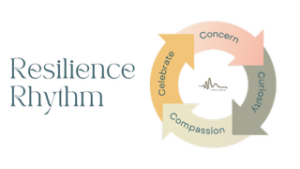
At Threaded, we exist to equip diverse communities for the long work of racial reconciliation and cultural understanding. And one of the most practical tools we’ve developed is the Resilience Rhythm—a four-step framework that guides people from overwhelm to hopeful engagement.
Concern → Curiosity → Compassion → Celebrate
Before you take the first step, there’s a posture you need to bring with you: humility. Humility is recognizing the limits of our experiences and perspectives. It sets aside judgment and replaces it with a genuine desire to understand. It slows us down and opens us up.
Here’s how it works:
Concern is the starting point — not avoidance. We ask: What did you see this week that troubled you? How are you feeling? How are you coping? Naming the pain is the first act of resilience. Humility makes this possible; it allows us to admit that we are vulnerable to the world’s brokenness and we don’t have this figured out.
Curiosity shifts the posture from reaction to reflection. We ask: What story might be underneath what you saw? What values are being expressed — even by those you disagree with? Curiosity is how empathy gets built. And curiosity requires humility, the honest admission that we might be missing something.
Compassion takes us deeper. We ask: What disappointments might be shaping the perspectives you find hardest to understand? What vision of the good life are they pursuing? Compassion doesn’t mean agreement; it means seeing the person behind the position. This is perhaps where humility does its heaviest lifting: holding space for someone else’s humanity when it costs you something.
Celebrate grounds us in hope. We ask: Where did you see something encouraging this week? Who did you celebrate? Even in hard seasons, there are signs of goodness worth naming.
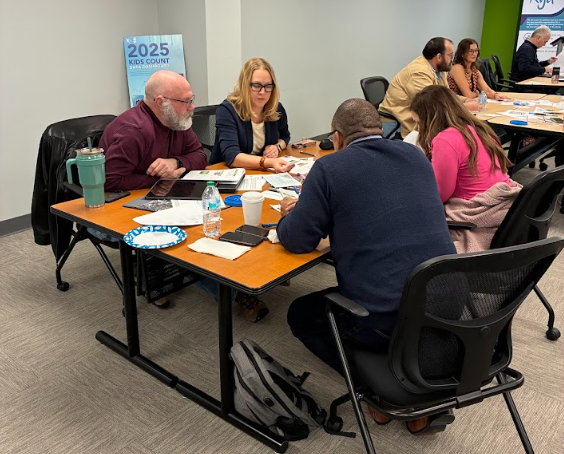
This framework works for youth workers, parents, classroom teachers, and young people themselves. You don’t need a curriculum binder or a seminary degree. You need a habit of honest conversation, a commitment to staying in the room, and the humility to know you’re still learning how.
Resilience isn’t the absence of pain. It’s the practice of processing it together.
Ready to go deeper? Explore Threaded’s resources at wearethreaded.org — including Journey Groups, Let’s Talk Race classes, and the Resilience Roundtable, a six-week virtual gathering for people in the reconciliation work.
4/24/26: Guest author has not disclosed any use of AI tools for the creation of this blog. Bounce Coalition does not assume responsibility for it’s content.