 The Bounce Coalition is thrilled to welcome its new Co-Chair, Dr. Tony Zipple. Tony has served on the Bounce Executive Committee since 2014, serving on both the Training/Evaluation and Strategy Workgroups. Throughout his decade-long commitment to Bounce, Dr. Zipple has worked with a number of organizations across the state to build more trauma-informed and resilient organizational cultures – including in-depth work with large managed care organizations, local healthcare systems, and even small nonprofits across the state. We look forward to Dr. Zipple’s guidance and leadership over the next several years. Learn more about Bounce’s new Co-Chair in the interview below.
What is your background and previous professional experience?
I have been with the Bounce Coalition from the very beginning and served as one of the original co-chairs. It is an honor to continue to work with such a great group on such an important project.
I am a psychologist by training (still licensed in Massachusetts) and have spent most of my career as an executive managing large community behavioral health organizations. I am fortunate to have had a lot of variety in my career. I spent 15 years as an accreditation surveyor. I was a full-time professor and academic researcher at Boston University for five years. I’ve had a chance to consult with a wide range of organizations in the United States, Singapore, and Pakistan.
My current work focuses on two things. First, I consult and train with a wide range of healthcare and social service organizations on strategies for building a workforce that is engaged, productive, and happy. Second, I teach workshops on happiness, well-being, positive neuroplasticity, and related positive psychology topics.
How does the work of Bounce connect with your other interest areas?
My earliest jobs involved working with people with the most severe mental illnesses and helping them develop the skills and resources they needed to have happy and satisfying lives in spite of their disabling illnesses. All of us carry the weight of trauma, stress, and a myriad of bad things that have happened in our lives. The question is not whether we get bumped around in life. All of us do. The question is how we can have a happy and productive life in spite of the stresses and traumas we experience. That has been the thread throughout my career, and Bounce is focused on exactly this issue. Bounce is committed to helping people understand the impact of stress and trauma and build resiliecet strategies enabling them to have good lives in the aftermath of stress and trauma.
What aspects of Bounce and being the co-chair of the coalition especially invigorate you?
I am a lifelong learner (and have four trips to graduate school to prove it). For me, the best thing about learning is the opportunity to share what I learned with others. I’ve spent much of my career as a teacher, consultant, and supervisor- all roles that involve sharing what I know with others in an effort to help them improve the quality of what they do. Understanding the impact of stress and trauma in our lives is a powerful thing. Teaching people strategies for mitigating the effects of stress and trauma is even better. Bounce is focused on helping our friends, coworkers, family, and neighbors understand that stress and trauma has negative, lifelong consequences and that we can build inner resources to help us have good lives in the face of stress and trauma. It’s hard to think of a more rewarding and interesting project.
What is your hope for Bounce in the next 2-3 years?
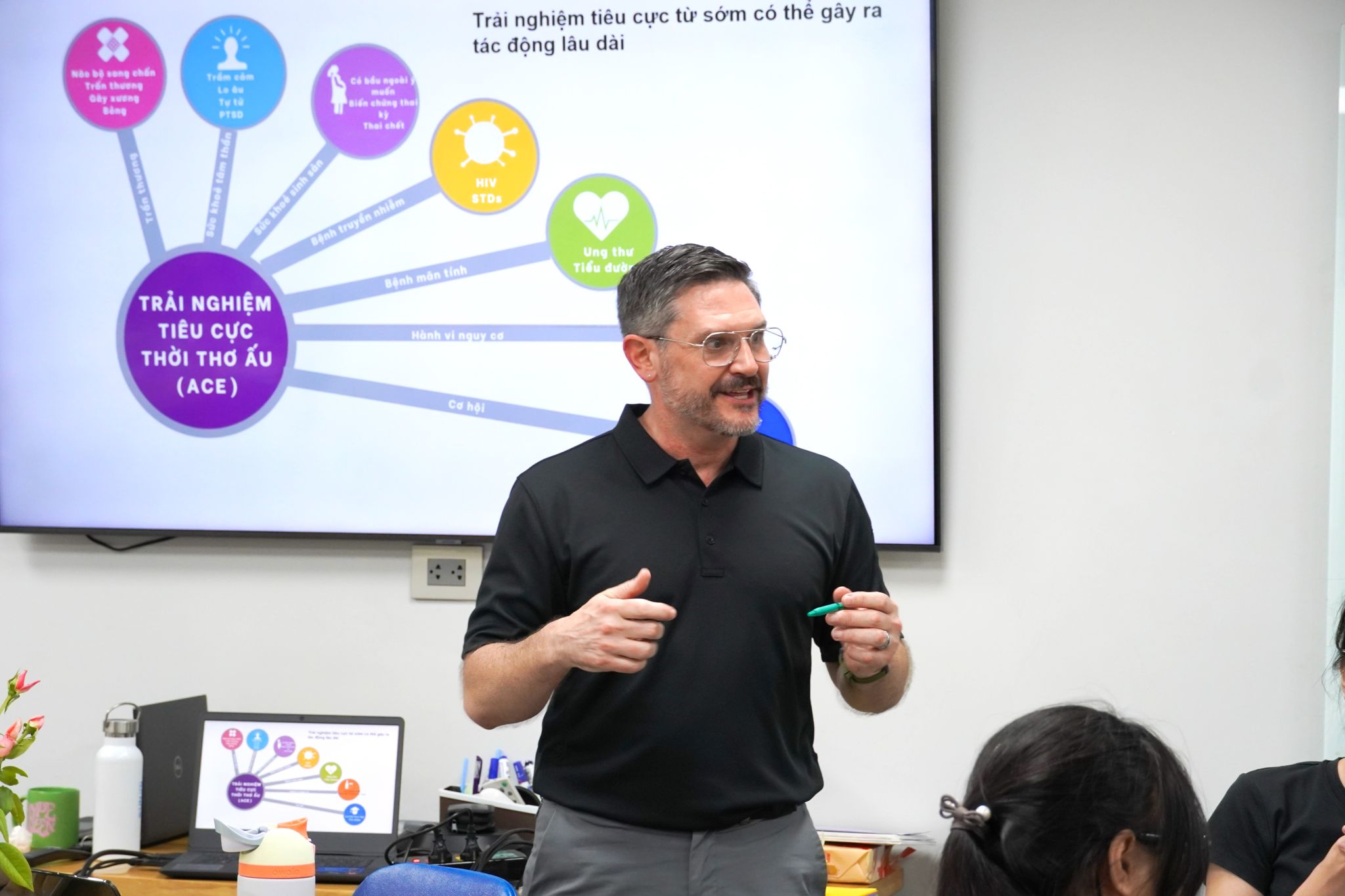
Bounce has done amazing things over its history. Our training and consulting has helped more than 20,000 people across Kentucky. Our communities are better places and our community members are happier and more engaged in life because of the work that Bounce has done. It is a remarkable story. My hope for Bounce in the coming few years is to build on this legacy and extend it in three ways.
- First, much of our work has been focused on schools and supporting children, a critical need in Kentucky. Kentucky also has many adults struggling with the residue of stress and trauma. It is important, I think, for Bounce to expand its work with adults who struggle with stress and trauma.
- Second, I would like to see Bounce deepen its toolkit of interventions for dealing with stress and trauma. We know that stress and trauma are bad and we need to work hard to build inner resources to manage it. There are so many wonderful tools in positive psychology for helping us to do this and we can find new ways to apply them in our work.
- Finally, Bounce is ready to expand its geographic reach. We have been very focused on Kentucky, but we know that communities in neighboring states face the same challenges that we do. Bounce can be helpful for them as well. I would love to see us expand our capacity to support them.
How do you practice self-care?
I’m a big believer that teaching resilience strategies start with practicing your own. I get about eight hours of sleep each night. I have friends and family whom I love and who love me. I walk 3-4 miles a day and get to the gym four or five times a week. I try to learn something new and interesting every day and share it with someone. I practice mindfulness and self-compassion moments. And I spend time with my office mate, Ziggy, a three-year-old Great Pyrenees rescue who is just delightful.